2026 Miami Grand Prix: Strategic Preview and Technical Briefing
Summary
The 2026 Formula 1 season resumes with Round 4 at the Miami Grand Prix following an unexpected five-week hiatus caused by the cancellation of the Bahrain and Saudi Arabian rounds. This break has transformed the Miami event into the effective start of a "new championship," as teams have utilized the unrestricted factory time to develop massive upgrade packages.
Mercedes currently holds a dominant lead in both championships, spearheaded by 19-year-old rookie sensation Kimi Antonelli. However, the competitive order faces significant disruption due to the introduction of refined technical regulations agreed upon during the break. These tweaks target energy deployment and safety, aiming to provide more "flat-out" driving. Combined with a Sprint format and an extended 90-minute practice session, Miami presents a high-stakes environment that will test whether the chasing pack—led by Ferrari and McLaren—can successfully bridge the gap to the Silver Arrows.
Regulatory Refinements and Technical Changes
Following data analysis from the first three rounds in Australia, China, and Japan, the FIA and Formula 1 stakeholders have implemented several regulatory "refinements" effective as of the Miami Grand Prix. These changes focus on optimizing the 2026 power unit performance and improving safety.
Qualifying Performance Enhancements
- Energy Management: Maximum permitted recharge has been reduced from 8MJ to 7MJ to discourage excessive "harvesting" and facilitate consistent flat-out laps.
- Superclip Duration: The duration is now targeted at two to four seconds per lap.
- Peak Power: Peak superclip power has been increased from 250 kW to 350 kW, reducing the driver’s energy management workload during a flying lap.
- Circuit Adaptation: The number of events allowed to use alternative lower energy limits has increased from 8 to 12.
Race and Safety Mechanisms
- Closing Speeds: To prevent dangerous speed differentials, the maximum power available through "Boost" is capped at +150 kW.
- Deployment Zones: MGU-K deployment is maintained at 350 kW in key acceleration zones (corner exit to braking point) but limited to 250 kW in other sections of the lap.
- Low Power Start Detection: A new system identifies cars with abnormally low acceleration after clutch release. In such cases, an automatic MGU-K deployment is triggered to mitigate rear-end collision risks, accompanied by visual flashing light warnings for following drivers.
- Wet Weather: Tyre blanket temperatures for intermediate tyres have been increased to improve initial grip. Maximum ERS deployment will be reduced in wet conditions to limit torque and improve control.
The "New Championship": Competitive Order and Upgrades
The five-week interval has allowed for development cycles far more extensive than a typical early-season break. Industry leaders suggest the cars appearing in Miami may effectively be "new machines."
Team-Specific Developments
- Mercedes: Despite winning all three opening races and one Sprint, Team Principal Toto Wolff views Miami as a "restart." The team aims to maintain its edge through optimized systems and their own upgrade path.
- McLaren: Team Principal Andrea Stella has explicitly stated that the MCL40 will be "entirely new" from an aerodynamic perspective. The team expects a "shift in the pecking order" as they attempt to recover performance relative to Mercedes.
- Ferrari: Frederic Vasseur noted that the break allowed for significant work on software and energy deployment. Analysts predict Ferrari could bring a "package and a half" to challenge the front-runners.
- Red Bull: Currently sitting 6th in the standings, the team is struggling with chassis and engine reliance. Max Verstappen currently sits in 9th place, highlighting the team’s early-season difficulties.
- Cadillac and Haas: Both teams consider Miami a home race. Cadillac, in its maiden season, is expected to introduce its first upgrade package.
Championship Standings (Pre-Miami)
Mercedes enters Miami with a substantial points cushion, though the field expects this gap to be challenged by the new technical packages.
Constructors' Championship
Position | Team | Points |
1 | Mercedes | 135 |
2 | Ferrari | 90 |
3 | McLaren | 46 |
4 | Haas | 18 |
5 | Alpine | 16 |
6 | Red Bull | 16 |
Drivers' Championship
Position | Driver | Team | Points |
1 | Kimi Antonelli | Mercedes | 72 |
2 | George Russell | Mercedes | 63 |
3 | Charles Leclerc | Ferrari | 49 |
4 | Lewis Hamilton | Ferrari | 41 |
5 | Lando Norris | McLaren | 25 |
Venue and Weekend Logistics
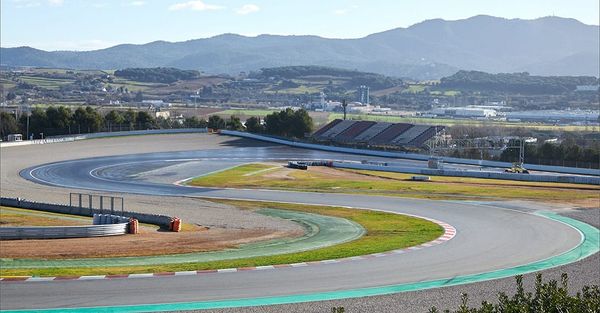
Track Characteristics: Miami International Autodrome
The circuit is a hybrid of street-track and man-made sections, characterized by:
- Sector Technicality: Sector 2 offers a slow "go-kart" feel that rewards technical precision, while other sectors feature long straights requiring high power and efficiency.
- Track Evolution: High dust buildup in Florida leads to significant track evolution and lap time gains toward the end of sessions.
- Tire Strategy: Pirelli is supplying the softest range (C3, C4, C5). Despite the soft compounds, a one-stop strategy is expected to remain optimal unless extreme heat increases degradation.
Sprint Format and Schedule Adjustments
Miami marks the second Sprint weekend of 2026. Because of the new regulations and the month-long absence from the track, the FIA has extended the Friday Free Practice 1 (FP1) session from 60 minutes to 90 minutes to allow for thorough data collection.
Support Series
The weekend features the North American debut of Formula 2. Following the cancellation of earlier rounds, F2 will now race in Miami and Montreal, giving US fans their first look at the feeder series, which includes Cadillac's third driver and former IndyCar star Colton Herta.
Key Storylines to Monitor
- Antonelli's Momentum: The rookie championship leader had a standout performance in Miami in 2025 (securing Sprint pole). Observers are watching to see if his back-to-back wins in China and Japan can be sustained against a more aggressive George Russell.
- Engine Optimization: Mercedes engines have shown superior optimization thus far. The new recharge rules (7MJ limit) may further favor the Mercedes power unit's efficiency.
- Reliability: With massive new aerodynamic packages and tweaked power unit parameters, mechanical reliability will be a high risk, particularly for McLaren and the new entrants, Cadillac and Audi.
- Red Bull's Recovery: All eyes are on whether Max Verstappen and Red Bull can find a breakthrough to move toward the top five, as they currently trail significantly on both chassis and power unit performance.